Introduction
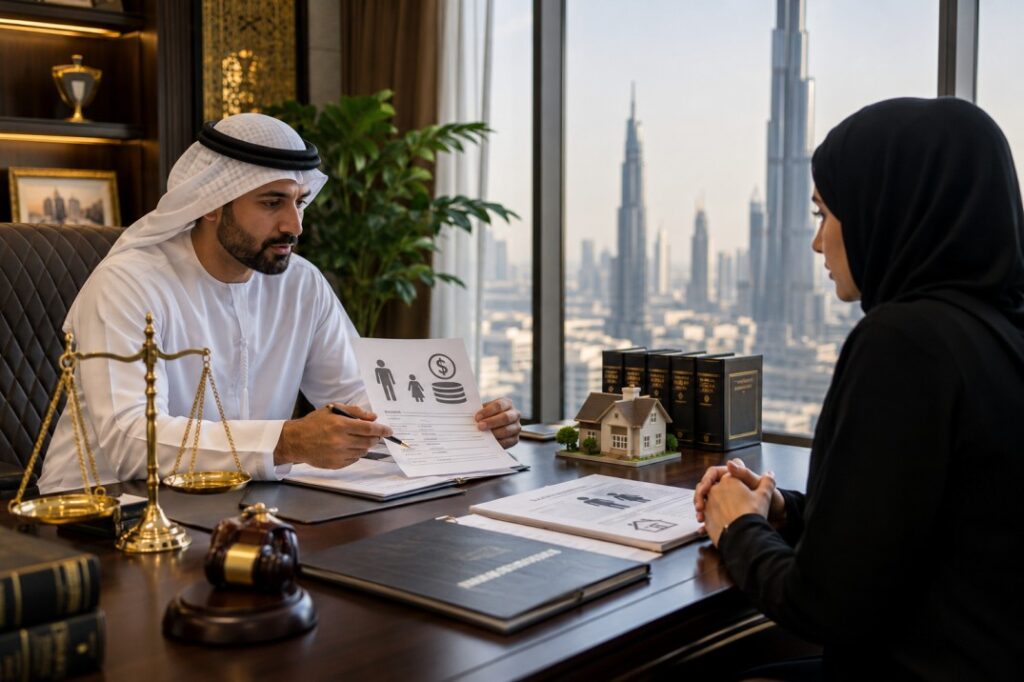
The United Arab Emirates has become home to millions of expatriates who have built successful careers, businesses, and families in the country. While many expats focus on growing their assets, few consider what happens to those assets after their death. Understanding inheritance law and UAE non-Muslim expat regulations is essential for protecting your family, property, investments, and business interests.
Without proper estate planning, your assets may be distributed according to legal procedures that differ from your wishes. A properly drafted will can provide clarity, reduce family disputes, and ensure your loved ones receive the assets you intend to leave behind.
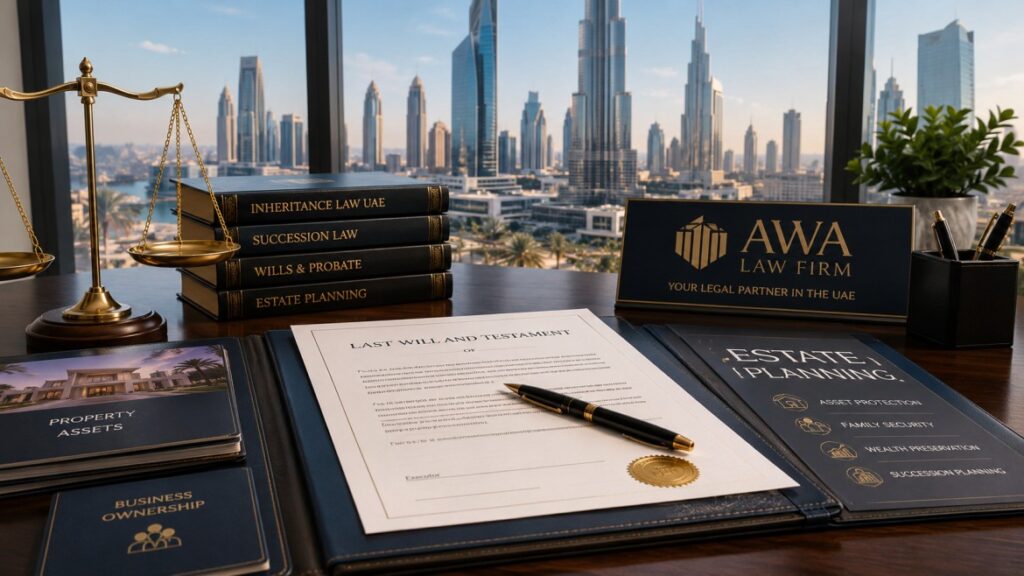
This comprehensive guide explains how Inheritance Law UAE regulations apply to non-Muslim expatriates, the available will registration options, and how expats can protect their estates through effective succession planning and estate planning strategies.
Table of Contents
- How UAE Inheritance Law Applies to Non-Muslims
- Sharia Succession vs. Non-Muslim Options
- What Happens if a Non-Muslim Dies Without a Will in the UAE?
- How to Write a Valid Will in Dubai as an Expat
- DIFC Wills & Probate Registry — The Best Option for Expats
- Abu Dhabi Judicial Department Wills for Non-Muslims
- What Can You Include in a UAE Expat Will?
- Cost of Making a Will in Dubai — Fee Breakdown
- Succession Planning for Business Owners in UAE
- How AWA Law Firm Helps with UAE Wills & Succession
- FAQs — Inheritance & Wills in UAE
How UAE Inheritance Law Applies to Non-Muslims
The UAE has introduced significant legal reforms that provide non-Muslim residents with greater flexibility regarding inheritance and succession matters. These reforms allow expatriates to structure their estates according to their personal wishes rather than relying solely on default inheritance rules.
For non-Muslim expats, inheritance planning can involve:
- Real estate properties
- Bank accounts
- Investments
- Company shares
- Vehicles
- Personal belongings
- Digital assets
- Overseas assets
Proper estate planning UAE strategies ensure that assets are transferred smoothly and efficiently to beneficiaries.
Sharia Succession vs. Non-Muslim Options
Traditionally, inheritance matters in many jurisdictions within the region were influenced by Sharia principles. However, modern UAE legislation provides alternatives for non-Muslim residents.
Today, non-Muslims can:
- Draft legally recognized wills
- Select beneficiaries of their choice
- Appoint guardians for minor children
- Determine asset distribution percentages
- Establish business succession plans
This flexibility allows expatriates to maintain greater control over their estate planning objectives.
What Happens if a Non-Muslim Dies Without a Will in the UAE?
One of the biggest risks for expatriates is dying intestate (without a valid will).
When no will exists:
- Probate proceedings become more complex
- Asset distribution may be delayed
- Family members may face legal uncertainty.
- Bank accounts can be temporarily frozen.
- Business operations may be affected
- Property transfers may require court procedures.
The absence of a will often creates significant stress for surviving family members and increases administrative complications.
For this reason, legal professionals strongly recommend preparing a valid will as early as possible.
How to Write a Valid Will in Dubai as an Expat
Creating a valid will requires careful legal drafting and compliance with applicable UAE regulations.
A properly prepared will should:
- Clearly identify the testator
- Identify beneficiaries
- Describe assets accurately
- Appoint executors
- Address guardianship issues
- Meet registration requirements
Because inheritance matters can involve multiple jurisdictions, seeking professional legal advice is highly recommended.
Many expatriates consult experienced family lawyers in Dubai when preparing wills and succession plans to ensure legal compliance and enforceability.
DIFC Wills & Probate Registry — The Best Option for Expats
The DIFC Wills Service is widely regarded as one of the most popular options for expatriates in the UAE.
Key benefits include the following:
Legal Certainty
The registry provides a clear framework for non-Muslim succession planning.
Asset Protection
Assets can be distributed according to the testator’s wishes.
Guardian Appointments
Parents can appoint guardians for minor children.
International Recognition
The DIFC framework is recognized for its structured probate procedures.
For many expatriates seeking certainty regarding inheritance and Dubai non-Muslim matters, the DIFC system remains a preferred option.
Abu Dhabi Judicial Department Wills for Non-Muslims
Another option available to expatriates is registering wills through the Abu Dhabi Judicial Department.
Advantages include:
- Government-backed registration
- Recognition of non-Muslim succession wishes
- Streamlined procedures
- Cost-effective registration options
The appropriate choice depends on the individual’s circumstances, assets, family structure, and long-term goals.
What Can You Include in a UAE Expat Will?
A comprehensive UAE will can address various personal and financial matters.
Common inclusions are:
Real Estate Assets
Properties located in Dubai, Sharjah, Abu Dhabi, and other Emirates.
Bank Accounts
Savings accounts, fixed deposits, and investment accounts.
Company Shares
Ownership interests in UAE businesses.
Family Guardianship
Guardianship arrangements for minor children.
Personal Possessions
Jewelry, vehicles, collectibles, and valuables.
International Assets
Depending on jurisdictional considerations, overseas assets may also be referenced.
A properly drafted will allows complete control over how these assets are distributed after death.
Cost of Making a Will in Dubai — Fee Breakdown
The cost of creating a will varies depending on several factors.
Typical expenses include the following:
Legal Consultation Fees
Professional advice and document preparation.
Drafting Charges
Preparation of customized succession documents.
Registration Fees
Government or registry charges.
Translation Costs
If documents require certified translations.
Updating Fees
Costs associated with amendments or future modifications.
While some individuals attempt to use generic templates, professionally drafted wills often provide significantly greater protection and legal certainty.
Considering the value of most expatriates’ assets, proper succession planning is generally viewed as a worthwhile investment.
Succession Planning for Business Owners in UAE
Business owners face additional succession challenges.
Without a succession strategy, business continuity may be disrupted by:
- Share ownership disputes
- Management uncertainty
- Delayed probate proceedings
- Banking restrictions
- Regulatory complications
A business succession plan should address the following:
Share Transfer Mechanisms
Clearly identifying who inherits ownership interests.
Management Continuity
Ensuring leadership responsibilities continue smoothly.
Partnership Protection
Protecting the rights of remaining business partners.
Family Interests
Balancing family inheritance goals with business stability.
Entrepreneurs should coordinate succession planning with experienced corporate lawyers in Dubai to ensure legal and commercial objectives are aligned.
Business owners who are considering expansion may also benefit from understanding how to set up a company in Dubai structures that facilitate long-term succession planning.
How AWA Law Firm Helps with UAE Wills & Succession
Navigating succession law in the UAE can be complex, especially when assets are spread across multiple jurisdictions.
AWA Law Firm assists clients with:
- Will drafting and review
- DIFC will register
- Estate planning strategies
- Probate proceedings
- Asset protection planning
- Family succession matters
- Business succession planning
- Cross-border inheritance issues
The firm’s legal team works closely with expatriates to create customized estate plans that protect family members and preserve assets.
Clients seeking assistance with probate proceedings may also benefit from consulting experienced civil lawyers in Dubai for court-related inheritance matters.
Office Location
AWA Law Firm
SPC, Zahia Area
Sheikh Mohammed bin Zayed Rd.
Sharjah, United Arab Emirates
Contact
📞 +971509616134
Whether you own property, operate a business, or simply want peace of mind for your family, professional legal guidance can help ensure your wishes are respected.
FAQs — Inheritance & Wills in UAE
Is my foreign will valid in the UAE?
A foreign will may be recognized in certain circumstances, but additional legal procedures may be required. Recognition depends on factors such as jurisdiction, asset location, and compliance with UAE legal requirements. Legal review is recommended to determine enforceability.
Can I leave assets to anyone in the UAE?
Generally, non-Muslim expatriates can designate beneficiaries of their choosing through a properly drafted and registered will. Professional legal advice can help ensure the distribution structure complies with applicable regulations.
Do I need a will if I only own one property?
Yes. Even a single property can create inheritance complications if no will exists. A properly drafted will helps ensure a smooth transfer to the intended beneficiaries.
What is probate in Dubai?
Probate Dubai refers to the legal process of validating a will, identifying assets, settling liabilities, and distributing an estate after death.
How often should I update my will?
Experts recommend reviewing your will after major life events such as marriage, divorce, childbirth, business acquisitions, or significant asset purchases.
Can business shares be included in a UAE will?
Yes. Company ownership interests can be addressed within a succession plan, helping ensure continuity and reducing disputes among heirs.
Protect Your UAE Assets — Draft Your Will with AWA Law
If you are a non-Muslim expatriate living in the UAE, proactive estate planning is one of the most important steps you can take to protect your family and assets.
AWA Law Firm provides professional guidance on inheritance law for UAE non-Muslim expats, DIFC wills services, succession law in the UAE, probate in Dubai, and comprehensive estate planning solutions in the UAE.
Contact AWA Law Firm today to discuss your will, inheritance strategy, and long-term asset protection plan.
📍 SPC, Zahia Area, Sheikh Mohammed Bin Zayed Rd, Sharjah, United Arab Emirates
📞 +971509616134